Reproduced from Article
The Story That Makes You Sick:
How labels become limitations and limitations become disease
Dr. Roger McFillin
Jan 8, 2026
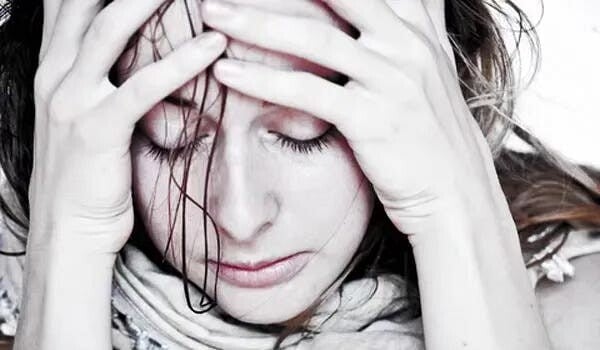
She sat in my office for the first time at forty-two, carrying twenty-three years of psychiatric history in her body and a pharmacy in her purse. Lithium since she was nineteen. Depakote added at twenty-six. Seroquel for sleep. Klonopin for the anxiety the other medications seemed to generate.
"I am bipolar," she said.
Not "I have." Not "I was diagnosed with." The disorder had fused so completely with her sense of self that there was no separation between the label and the woman. This was not a condition she experienced. This was who she was.
I asked about the beginning. She was nineteen, her father had just died suddenly, and her mother was so submerged in grief she couldn't see her daughter drowning beside her. Within weeks, the young woman stopped sleeping. Her emotions became oceanic, rising in swells she couldn't control. She felt everything at once, too much, too fast, with no one to help her hold any of it.
A psychiatrist saw her for eleven minutes and delivered a verdict that would shape the next two decades: chemical imbalance, genetic predisposition, a condition to be managed for life.
God forbid you feel too much.
For twenty-three years, she built her identity around being broken. She made choices a "bipolar person" would make. She avoided challenges a "bipolar person" couldn't handle. She accepted limitations a "bipolar person" had to accept. The label didn't just describe her. It constrained her consciousness, drawing a boundary around what she believed was possible for someone like her.
I asked her a question no one had asked before: What if your response to losing your father while being emotionally abandoned by your mother was not a disease? What if a teenager's psyche fragmenting under impossible circumstances is not pathology but a very predictable response to unbearable pain?
"What if there was never anything wrong with you?"
She looked like she saw a ghost. These were her thoughts at the time and now somebody acknowledged this as a possibility.
Eighteen months later, under careful supervision, she was drug-free for the first time in her adult life. Because the story underneath them had been a lie from the beginning.
She was never "bipolar" (whatever this even means). It's an empty diagnosis. Like ADHD. She was a nineteen-year-old girl who needed someone to witness her pain instead of diagnose it.
The longer I do this work, the more I have come to see psychiatric labels as something close to arbitrary. Bipolar disorder is not an explanation. It is a description. We observe a pattern and we name it, and then we act as though naming it has told us something. It has told us nothing. It has not explained why this particular human being is suffering in this particular way. But the label does something else entirely. It becomes a consciousness. A filter. A definition of self that shapes every perception and every possibility. And once I recognized this mechanism, I began to wonder where else it operates. Where else have we mistaken labels for understanding? Where else have we handed people limitations disguised as diagnoses and watched them build their entire lives inside walls we constructed?
The Man Who Was Waiting to Die
He came to me at fifty-one, already grieving his own death.
His father had died of heart disease at sixty-three. His grandfather at fifty-nine. Two uncles before they reached sixty-five. He had been told his entire adult life that heart disease "ran in his family," that it was "in his genes," that it was "only a matter of time."
So he lived like a man with a death sentence. He monitored his cholesterol with religious devotion. He took statins that drained his energy and created digestive issues. He went to cardiologist appointments every six months, submitting to tests that confirmed what he already believed: the clock was ticking. He had organized his entire existence around the assumption that his body was a bomb waiting to explode.
What he had never examined was the belief itself.
His father had died of heart disease, yes. His father who worked seventy-hour weeks at a job he hated. Who smoked for thirty years. Who ate whatever was fast and cheap. Who never exercised. Who carried the unprocessed rage of his own childhood like a stone in his chest.
His grandfather had died of heart disease. His grandfather who lived through the Depression, who knew poverty and scarcity as daily companions, whose nervous system never learned that the emergency was over.
What was "genetic" about any of this?
The patterns that kill us are not written in our DNA. They are written in our environments, our behaviors, our suppressed emotions, our chronic stress, our learned helplessness, our identity-level beliefs about what is possible for someone like us. The son inherits the father's disease not through genes but through modeling, through family culture, through the same unprocessed pain passed down like a poisoned heirloom. The same diet.
But tell a man his fate is genetic, and you have accomplished something powerful. You have located the problem somewhere he cannot reach. You have removed his agency. You have made him dependent on a system that will manage his inevitable decline rather than addressing the factors actually killing him. You have created a customer.
This man did not need another statin. He needed to examine the story he had been living inside. He needed to see that the "genetic destiny" he had accepted was not destiny at all but a belief, and that beliefs can be changed.
When he finally understood this, everything shifted. Not through denial of risk but through the reclamation of agency. He addressed the stress. He processed the grief he had been carrying for decades. He stopped living like a man waiting to die and started living like a man who had a say in his own fate. He got off the pills after his own research. He ate the red meat he was told to stop.
His markers improved. His cardiologist was baffled. The man was not baffled. He had simply stopped identifying as someone whose death was predetermined.
The Mechanism
Here is how it works: a label is assigned, and consciousness reorganizes around it.
The child told she is "shy" does not experience this as an external description she can evaluate and reject. She experiences it as information about her nature. The label enters her identity and begins generating evidence for itself. She avoids speaking up because that is what shy people do. She interprets her racing heart before a presentation as proof of her shyness rather than as normal human nervousness. She builds a life within the walls of the label, never testing whether the walls are real, because why would you test what you already know to be true?
This is not a metaphor. This is the mechanism by which limitation becomes identity.
Every label carries implicit instructions. It tells you what someone like you can expect, what someone like you should attempt, what someone like you must accept. The label does not just describe what is. It prescribes what will be. It draws a boundary around possibility and teaches you to live inside it.
Now multiply this across a lifetime. The shy child becomes the anxious teenager becomes the adult diagnosed with social anxiety disorder. Each label more clinical than the last. Each one more deeply fused with identity. Each one further from the truth. She had been told a story about herself so early and so often that she lost the ability to imagine any other.
The limitation was never real. Only the belief in it.
The Industry
There is an industry built on teaching people to see themselves as fragile, defective, and in need of treatment.
Not sick in ways that can be fixed. Sick in ways that require permanent management. The business model is elegant in its cruelty: create a customer at the level of identity, and you have a customer for life.
Watch how it works in psychiatry. A child responds predictably to an unpredictable environment. She cannot focus in school because her nervous system is locked in survival mode, scanning for threats instead of absorbing information. She is emotionally volatile because no one has taught her to regulate and no one has given her a safe enough environment to learn. She acts out because acting out is the only language she has for pain that no one is addressing.
A psychiatrist sees her for minutes. Asks standardized questions. Assigns a label. ADHD. Oppositional Defiant Disorder. Disruptive Mood Dysregulation Disorder. The label is presented as a medical fact, something discovered rather than constructed, something the child has rather than something being done to her.
And then the drugs begin.
The message delivered before she is old enough to question it: something is wrong with you. Not with your environment. Not with the adults who were supposed to protect you. Not with the systems that failed you. With you. Your brain. Your chemistry. Your genes.
This is how the industry creates its customers. By installing limitation at the level of identity before the child has any capacity to resist. By the time she is an adult, she will not know who she is without a diagnosis. The labels may evolve as she ages, escalating from the childhood disorders to the adult ones, but the fundamental identity will remain: she is someone who is sick. Someone who must be managed. Someone whose life will be shaped by the boundaries of her condition.
This is not treatment. This is recruitment into a system that profits from her smallness.
The Prevention Racket
But psychiatry is only one arm of the machine. There is another, dressed in the language of empowerment and proactive care, that accomplishes the same thing through different means.
The prevention industry.
Genetic testing companies will now analyze your DNA and deliver a report card of your future suffering. Your risk for heart disease, diabetes, cancer, Alzheimer's, depression, addiction. Percentages and probabilities presented with the authority of science, telling you what your body will do to you before it has done anything at all.
And what are you supposed to do with this information?
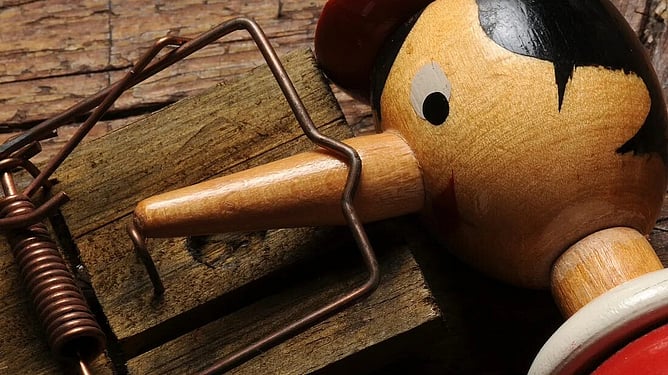
Worry. Monitor. Scan. Screen. Submit to regular surveillance. Take preventive medications that manage risks rather than treat realities. Organize your identity around a disease you do not have but have been told you will.
This is not empowerment. This is the installation of fear at the level of identity. It is the creation of patients before there is any pathology. It is a business model built on teaching healthy people to see themselves as sick-in-waiting.
The woman who learns she has the BRCA gene begins to experience her breasts as time bombs. The man who learns he has a genetic predisposition to heart disease starts scanning his body for symptoms, interpreting every sensation through the lens of the doom he has been promised. The person told they are "high risk" for depression begins to filter their normal sadness through a diagnostic frame, wondering if this is the beginning of what they were warned about.
The prediction becomes a lens. The lens shapes perception. Perception shapes reality.
The Genetic Lie
Underneath all of it runs the doctrine that makes the entire machine possible: genetic determinism.
"Repeat a lie often enough and it becomes the truth"
-Joseph Goebbels, Nazi Minister for Public Enlightenment and Propaganda
"It runs in families." "It's in your DNA." "You were born this way."
This is the story that seals the cage. Because if your suffering is written into your genetic code, then there is no escape. No amount of work, insight, lifestyle change, or spiritual development can alter what was predetermined before your birth. You can only manage. You can only medicate. You can only accept your inheritance and do your best to function despite it.
Decades of research hunting for the genes "responsible" for mental illness, heart disease, cancer, and a hundred other conditions have produced almost nothing clinically useful. The much-hyped genetic associations explain tiny fractions of variance in who develops what. The Human Genome Project promised a revolution in medicine. What it delivered was the humbling realization that genes are not destiny. They are not even close to destiny.
Your genes are a set of possibilities, not a set of instructions. They are switches that can be turned on or off by environment, behavior, stress, nutrition, relationships, beliefs. The field of epigenetics has shown us that the genome is not a fixed blueprint but a dynamic, responsive system that is constantly being shaped by how you live.
But genetic determinism persists because it serves the industry too well to be abandoned.
It protects parents from examining family dynamics. It protects doctors from addressing root causes. It protects pharmaceutical companies from questions about whether their products actually work. It protects the entire system from accountability by locating the problem permanently and immovably inside the patient.
Your genes made you this way. There's nothing anyone could have done. There's nothing anyone can do now except manage. Here's a prescription. Here's a screening schedule. Here's a lifetime of fearful vigilance.
The lie is the foundation. Everything else is built on top of it.
When Consciousness Creates Disease
Here is what the industry will never tell you, because it would undermine the entire operation:
Belief can make you sick.
This is not metaphor. This is not positive thinking pseudoscience. This is decades of research in psychoneuroimmunology, the study of how mind, nervous system, and immune function are interconnected.
When you believe you are sick, your body responds to the belief. Chronic stress, which is precisely what is generated by identifying as ill or at-risk, suppresses immune function, increases inflammation, disrupts hormonal balance, and alters gene expression. The fear of disease creates the physiological conditions in which disease thrives.
The nocebo effect is the dark mirror of the placebo. Tell a patient they are receiving a medication with serious side effects, give them a sugar pill, and a significant percentage will develop those exact side effects. Tell a person they have a high genetic risk for a condition, and their body begins responding to the information as though the condition were already present.
The label does not just constrain consciousness. It instructs the body.
The child told she has a disorder internalizes chronic stress about her own defectiveness. That stress alters her neurochemistry, her immune function, her development. The man told his genes guarantee heart disease lives in a state of low-grade fear that elevates cortisol, increases blood pressure, and accelerates the very cardiac damage he was warned about. The woman told she is destined for her mother's cancer carries that terror in her tissues, creating an inflammatory environment hospitable to exactly what she fears.
We do not merely observe disease and label it. In many cases, we create it. We speak it into existence. We install it at the level of identity and then watch the body conform to the story it has been told about itself.
The medical system calls this early detection and prevention. But what if it is, at least in part, early creation?
This is not about denying suffering or pretending illness does not exist. It is about recognizing that the frame we place around suffering matters. The story we tell about what is wrong with us becomes part of what is wrong with us. The identity we accept becomes the life we live.
You are not your diagnosis. You are not your genetic risk profile. You are not the label that was assigned to you before you were old enough to question it.
These are stories. Some of them were told to you by people who believed they were helping. Some were told by industries that profit from your belief in your own limitation. But none of them are you. None of them were ever you.
The cage is made of narrative. The walls are made of belief. And what was constructed can be deconstructed.
I have watched it happen too many times to doubt it. The woman who was never bipolar. The man who refused to die on schedule. The children who grew up and shed the labels that had been assigned to them like dead skin. They did not become someone new. They stopped being someone false.
Underneath the labels, beneath the limitations, behind the identity that was built for you by systems that needed you small, there is something else. Something that was never touched by the diagnosis. Something that cannot be captured by a billing code or predicted by a genetic test.
It is not sick. It is not fragile. It is not waiting to break down.
It has been there the whole time, waiting for you to stop believing what they told you and start asking what might be true instead.
The question is not whether you are strong enough to escape the story.
The question is whether you are willing to find out who you are without it.
AWAKEN
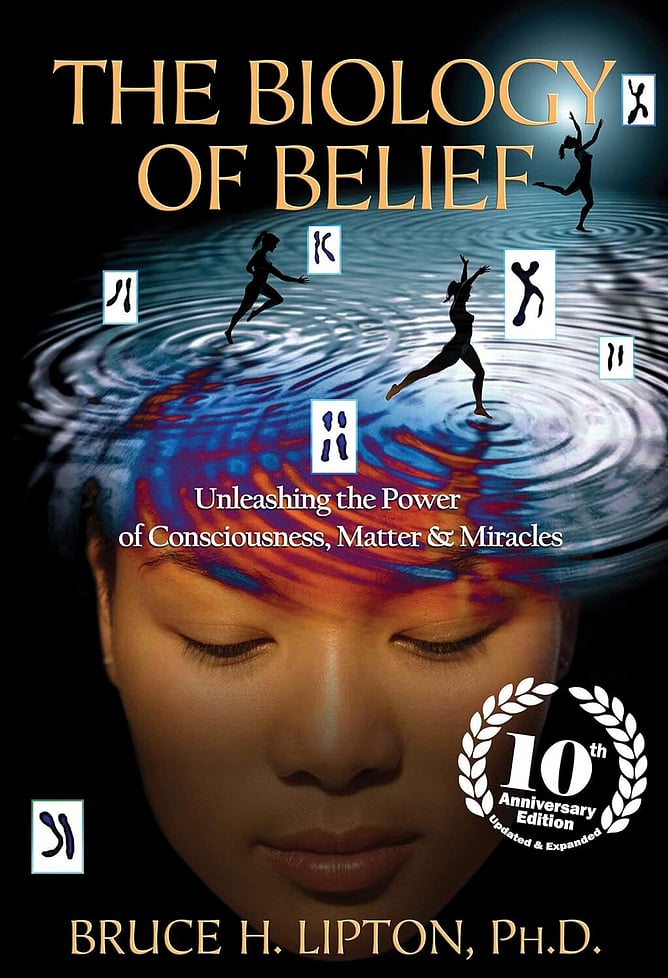
Recommended Reading